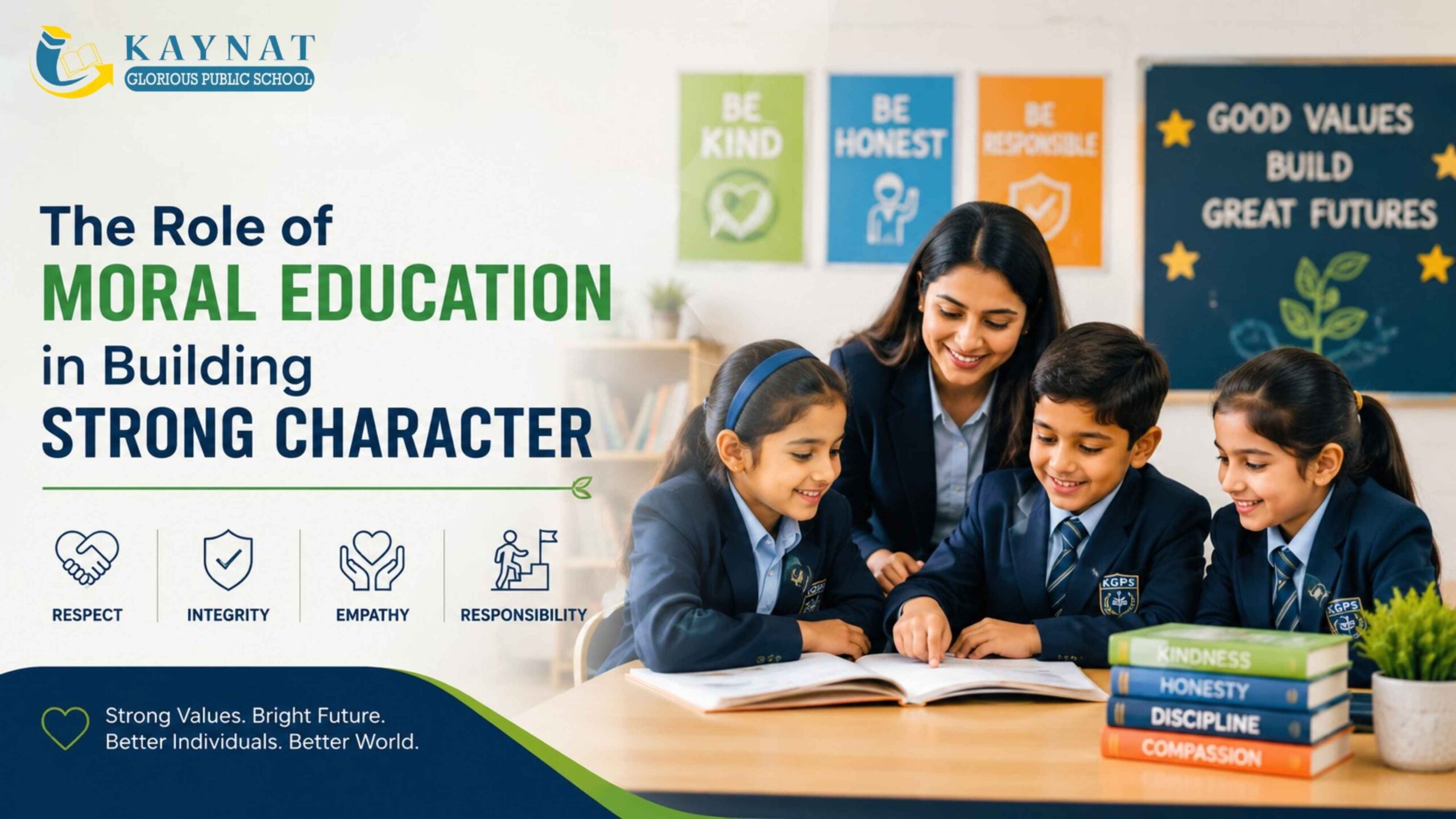
In today’s fast-changing world, academic excellence alone is not enough to prepare children for life. While subjects like Mathematics, Science, and Technology equip students with knowledge and skills, moral education shapes their values, attitudes, and behavior. It helps children distinguish between right and wrong, make ethical decisions, and develop into responsible citizens.
At Kaynat Glorious Public School (KGPS), we believe that true education goes beyond textbooks. Our mission is to nurture students who are not only academically successful but also compassionate, respectful, and socially responsible individuals.
What is Moral Education?
Moral education is the process of teaching children values, ethics, and principles that guide their behavior in everyday life. It focuses on developing qualities such as:
- Honesty
- Respect
- Responsibility
- Kindness
- Empathy
- Discipline
- Integrity
- Compassion
These values become the foundation of a student’s character and influence how they interact with family, friends, teachers, and society.
Also read: 👉 Why Coding Should Start Early: Building Tomorrow’s Innovators Today
Building Strong Character Through Moral Education
1. Developing Honesty and Integrity
Honesty is one of the most important qualities a child can develop. Moral education teaches students to be truthful, take responsibility for their actions, and uphold ethical standards even when no one is watching.
Children who practice integrity earn trust and build stronger relationships throughout their lives.
2. Encouraging Respect for Others
Respect is essential for creating a harmonious society. Through moral education, students learn to appreciate differences, value diverse perspectives, and treat everyone with dignity.
This helps create an inclusive environment where students feel safe, accepted, and valued.
3. Fostering Empathy and Compassion
Understanding the feelings and experiences of others is a key component of emotional intelligence. Moral education encourages students to develop empathy, making them more compassionate and supportive individuals.
Empathetic children are more likely to help others, resolve conflicts peacefully, and contribute positively to their communities.
4. Strengthening Decision-Making Skills
Every day, children face choices that shape their future. Moral education equips students with ethical reasoning skills that help them make responsible decisions.
By understanding the consequences of their actions, students learn to choose what is right rather than what is easy.
5. Promoting Responsibility and Self-Discipline
Success in life requires discipline and accountability. Moral education teaches students to take ownership of their actions, fulfill commitments, and develop strong work ethics.
These habits contribute significantly to academic achievement and personal growth.
Moral Education and Academic Success
Research consistently shows that students with strong character traits often perform better academically. Values such as perseverance, discipline, and responsibility help students stay focused, manage challenges, and achieve their goals.
When moral education is integrated into daily learning, students develop a positive attitude toward education and become lifelong learners.
Preparing Future Leaders
Leadership is not just about authority; it is about serving others, making ethical decisions, and inspiring positive change. Moral education helps students develop leadership qualities by encouraging:
- Accountability
- Teamwork
- Respectful communication
- Problem-solving
- Community service
These skills prepare students to become responsible leaders in their schools, workplaces, and communities.
The Role of Schools and Parents
Character development is most effective when schools and parents work together. Schools provide structured opportunities to teach values, while parents reinforce those lessons at home through everyday interactions and examples.
When children receive consistent guidance from both educators and parents, they are more likely to internalize positive values and behaviors.
How KGPS Promotes Moral Education
At Kaynat Glorious Public School, moral education is an integral part of our holistic learning approach. We focus on nurturing well-rounded individuals through:
- Value-based learning activities
- Character-building programs
- Leadership opportunities
- Community engagement initiatives
- Sportsmanship and teamwork development
- Positive school culture and discipline
Our goal is to shape students who are confident, ethical, compassionate, and prepared to contribute meaningfully to society.
Conclusion
In an increasingly complex world, moral education plays a vital role in building strong character and shaping responsible future citizens. It teaches children the values they need to navigate challenges, build meaningful relationships, and lead successful lives.
At KGPS, we believe that education is not only about academic achievement but also about developing character, integrity, and compassion. By investing in moral education today, we are preparing students to become the thoughtful leaders and responsible citizens of tomorrow.
“Education is not just the learning of facts, but the training of the mind and character for life.”